Cob Construction: Ancient Roots for a Sustainable Future in Aotearoa
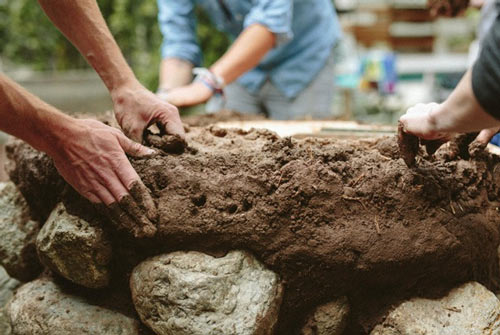
Imagine a quieter construction site with less waste piling up. The materials would be scooped directly from the ground nearby rather than trucked in from afar or shipped internationally.
Imagine thick, sturdy walls rising, sculpted layer by layer from a simple, damp mixture of local soil, straw, and water.
This is not a fantasy (though a resemblance to the buildings in the Minecraft franchise); it is the practical reality of cob construction.
This powerful combination - an ultra-local, low-impact process that creates inherently comfortable, healthy spaces - feels especially appropriate as we plan New Zealand's sustainable innovation incubator project.
This piece is your go-to introduction to Cob. We'll examine how it works, weigh its impressive environmental benefits against real-world challenges, examine real-world examples, and see if Cob can play a significant role in our ambitious project. Let us investigate the potential right beneath our feet.
WHAT IS COB
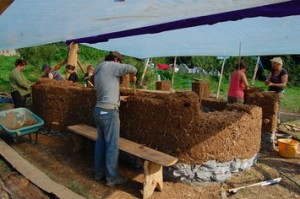
Cob is a traditional building technique that uses natural materials to create sturdy, monolithic walls without the need for forms or blocks. It is one of humanity's oldest and most reliable building methods, and it has been used for millennia throughout the world, including the UK (particularly Devon and Cornwall), Wales, the Middle East, Africa, and even some parts of the Americas.
The Core Mix:
| Ingredient | Source | Eco-friendly Aspect |
| Clay | Local Soil | No transportation, natural material |
| Sand | Local Soil | Abundant, natural |
| Straw | Local Fields | Renewable, provides insulation |
| Water | Rainwater | Can be harvested locally, natural |
The building process involves thoroughly mixing the components, usually by hand, but for larger projects, mechanically. Layers (or "lifts") of this moist mixture are applied to a foundation, with each layer given time to solidify before the next. As they rise, walls are usually shaped by hand or with basic tools, giving designers much creative freedom. Cob is monolithic because it is constructed as a single mass, removing the joints present in masonry.
Cob walls tend to be load-bearing and robust. However, given New Zealand's seismic conditions and building codes, structural engineering validation is vital for safe application. Its sculptural versatility, which readily accommodates curves, niches, and built-in features, is a significant advantage. Its longevity is confirmed by its lengthy global history.
WHY COB
With its many environmental benefits, cob construction is a great option for eco-friendly initiatives like the NZ Innovation Incubator. These advantages fit in nicely with the objectives of lessening the impact on the environment:
Low Embodied Energy & Local Sourcing: Subsoil (often from the site), sand, and straw are the main locally sourced, minimally processed materials used by Cob. This significantly lowers the embodied energy that conventional materials like steel and concrete have when it comes to long-distance transportation, manufacturing, and material extraction.
Resource Efficiency & Waste Reduction: Making use of easily accessible subsoil transforms a possible waste stream into a useful resource. Additionally, compared to techniques that involve cutting and fitting manufactured components, the monolithic building process naturally generates less construction waste.
Outstanding Thermal Performance: Cob and other earth walls have a high thermal mass, as explained in materials such as the CSIRO Bulletin on Earth-Wall Construction. Because of their ability to absorb and release heat gradually, they can naturally control indoor temperatures, lessen the need for HVAC systems, and improve occupant comfort all year long.
Healthy Indoor Environments: Cob is non-toxic and made of natural materials that don't release toxic volatile organic compounds (VOCs) that are frequently present in synthetic products. Because of its vapour permeability, or "breathability," walls can passively control humidity, improving indoor air quality. This is a crucial component of sustainable building performance that has been studied in several studies, including practice-based research.
Durability & Biodegradability: Well-maintained cob structures can endure for centuries. The materials can naturally biodegrade and return to the earth at the end of their life with little impact on the environment.
CASE EXAMPLES
For this primer, there were few documented case studies of larger public or commercial cob buildings in New Zealand, possibly because traditional earth construction faces unique seismic engineering and scaling issues in this country. Consequently, we learn from past global practices that have been recorded in scholarly studies:

This preserved 19th-century Perthshire schoolhouse provides important information about the long-term performance of cob. Traditionally constructed with a base of rubble stones, local subsoil mixed with straw (cob), and finished with breathable lime, it naturally embodies low-impact material sourcing, reducing manufacturing and transportation energy in comparison to more contemporary alternatives. Its designation as a conserved "rare survival" highlights how long-lasting properly cared-for earth structures can be, which is crucial for sustainability. This particular building's hygrothermal performance—or how it handles heat and moisture—has been studied in this research. The findings provide information on how cob walls perform in cool, damp climates like Scotland, which has a direct bearing on occupant comfort and energy efficiency.

In Matagalpa, Nicaragua, a case study contrasted cob construction with traditional concrete block building, which is frequently out of reach for the local population. According to a Life Cycle Assessment (LCA) that concentrated on the building stage, the cob technique produced noticeably fewer fossil CO2 emissions. This advantage mostly resulted from avoiding the traditional structure's energy-intensive iron reinforcement and concrete block production. The study emphasises cob's potential as an inexpensive, low-impact rural housing solution, particularly in areas where local labour and materials are easily accessible, even though non-cob elements (such as paints, solvents, and tiles) were the primary emission sources for the cob house itself.
CONCLUSION
Team, even though Cob's low-impact profile is very in line with the Incubator's sustainability objectives, using it as the main structure for this particular office/industrial project in Auckland poses significant risks in terms of commercial viability, predictable performance, and seismic engineering at scale.
Therefore, instead of using Cob for the primary load-bearing system, I suggest strategically showcasing it in features like interior walls or landscape elements. I suggest that we assess prefabricated modular systems for the main structure. In addition to allowing for high overall sustainability performance, this approach offers significant benefits that are appropriate for our project needs, such as the potential for faster construction timelines that are crucial for commercial developments, high-quality control from factory fabrication, reduced on-site waste, and efficient integration of building services.
Comments
Post a Comment